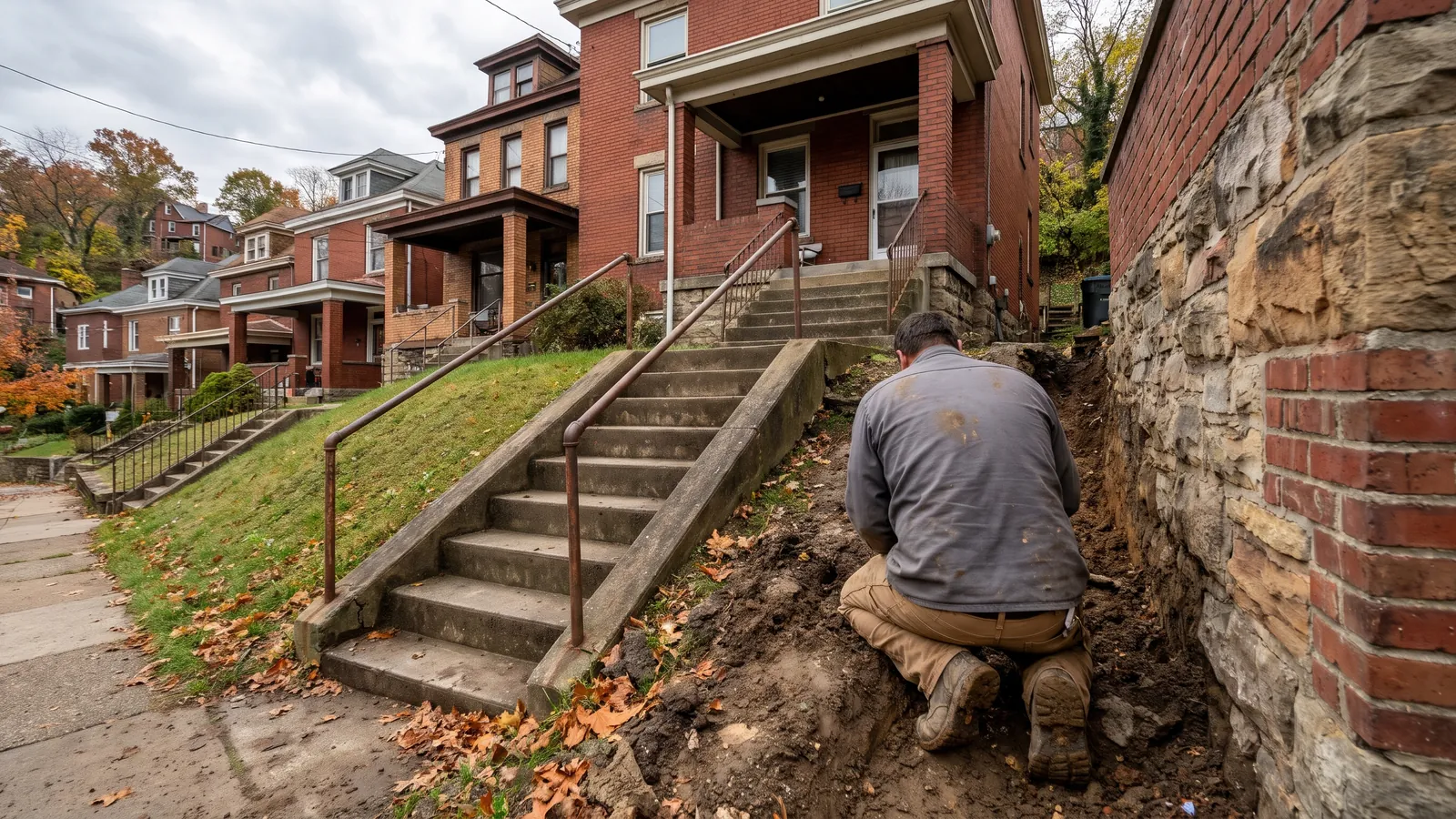
Foundation repair for a city built on clay, hills and hard winters.
Steel City Foundation Works fixes cracked and bowing basement walls, settling corners and wet basements across Pittsburgh and the towns around it. We start with a free inspection, explain what the soil and water are doing to the house, and price the repair in writing before any work starts.
Licensed and insured · Written price first · Permits handled when the job needs one
Budget numbers before anyone shows up
Most people call us after noticing something and then wonder whether it is a few hundred dollars or a few thousand. These are the ranges we see for typical jobs in Pittsburgh houses. Your number comes after the inspection, in writing, and it does not change once you say yes.
- Sealing one poured-wall crack$450 – $950
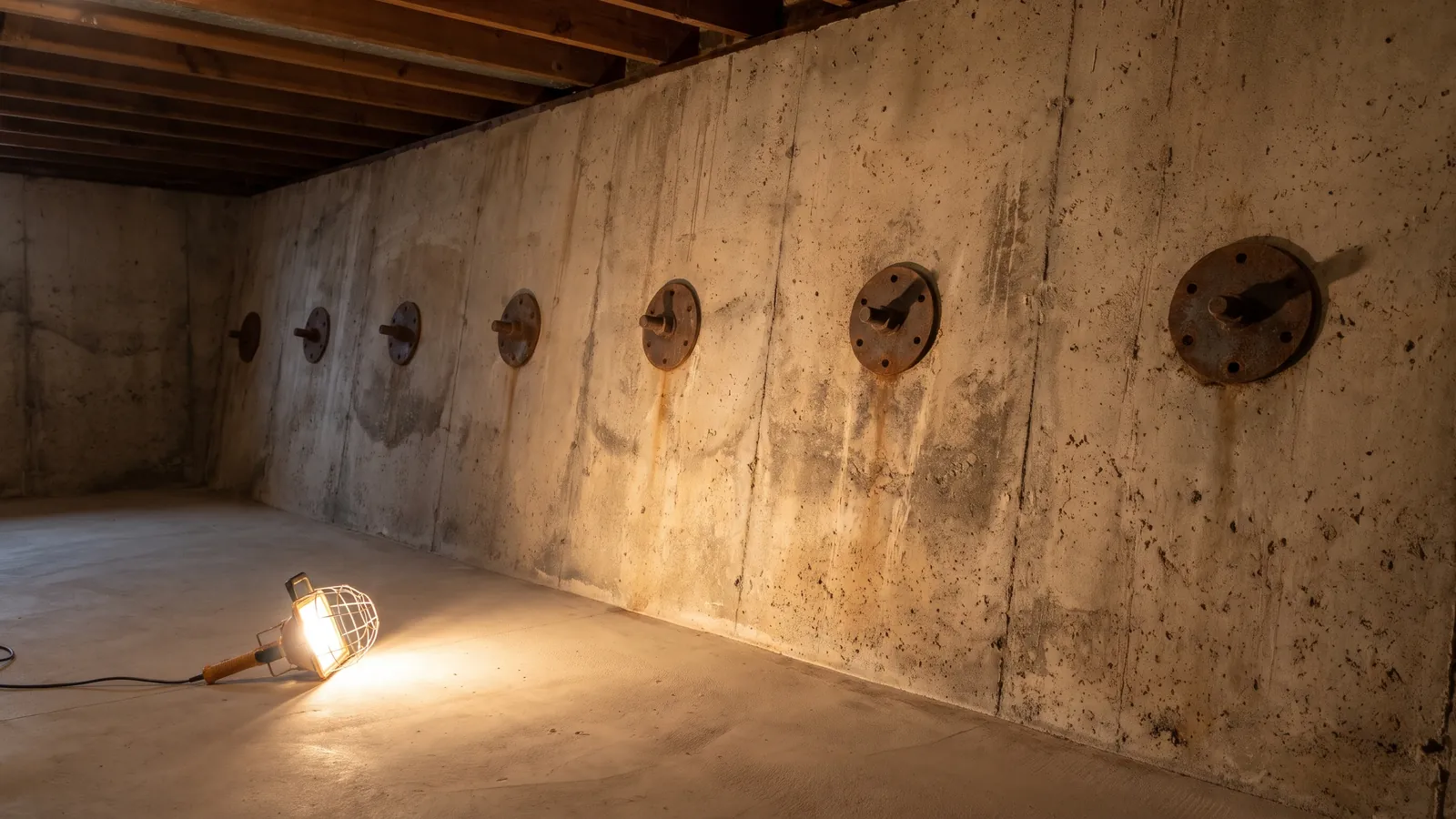
- Bracing a bowing wall with straps or anchors$3,500 – $9,000
- Piers under a settled corner$1,600 – $3,200 per pier
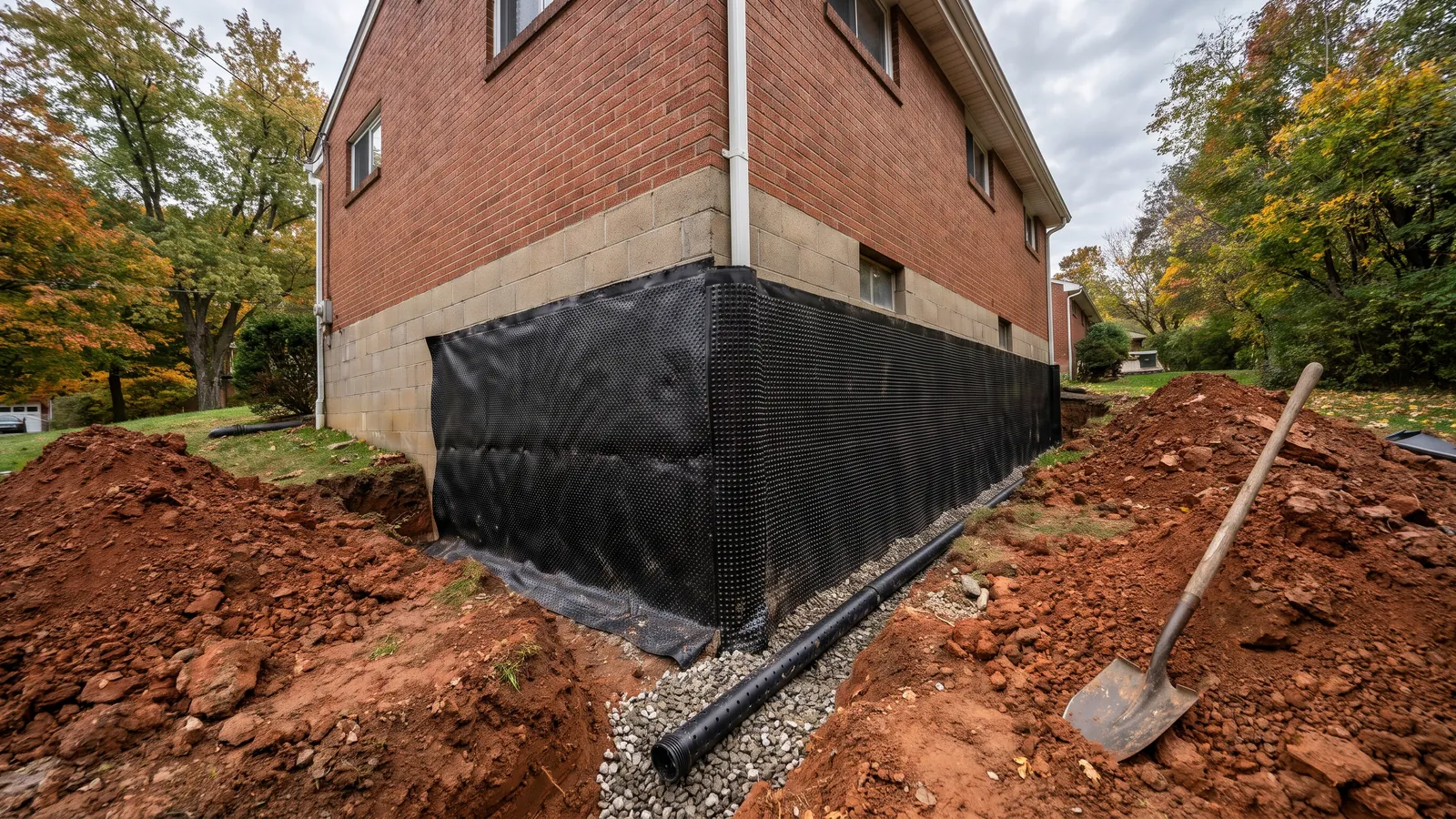
- Interior drain and sump, full basement$6,500 – $14,000
- New sump pump with battery backup$1,400 – $2,600
Book a free foundation inspection
Tell us what you are seeing in the basement or on the walls and where the house is. We call back to set a time, and the inspection costs nothing.
Ten kinds of work, all of it below the first floor
Every job here starts the same way: find where the movement or the water is coming from, then fix that, not just the crack you can see.
Foundation crack repair
Poured-wall cracks sealed with injected resin, block cracks traced to their cause.
Settling and sinking
Corners that dropped, sloping floors and doors that stopped closing.
Pier installation
Helical and push piers taken down to firm soil or rock under the footing.
Bowing wall repair
Wall anchors, carbon fiber straps and steel braces for walls leaning in.
Basement waterproofing
Inside or outside, matched to where the water is getting in.
Interior drainage
A drain cut in along the wall that carries seepage to a sump.
Sump pumps
New pumps, replacements and battery backups for spring thaw and summer storms.
Crawl space repair
Vapor barriers, sealing, and support posts under sagging beams.
Concrete leveling
Sunken walks, steps, patios and driveways lifted back into line.
Structural inspection
A free look at the whole house, and a written report when you need one.
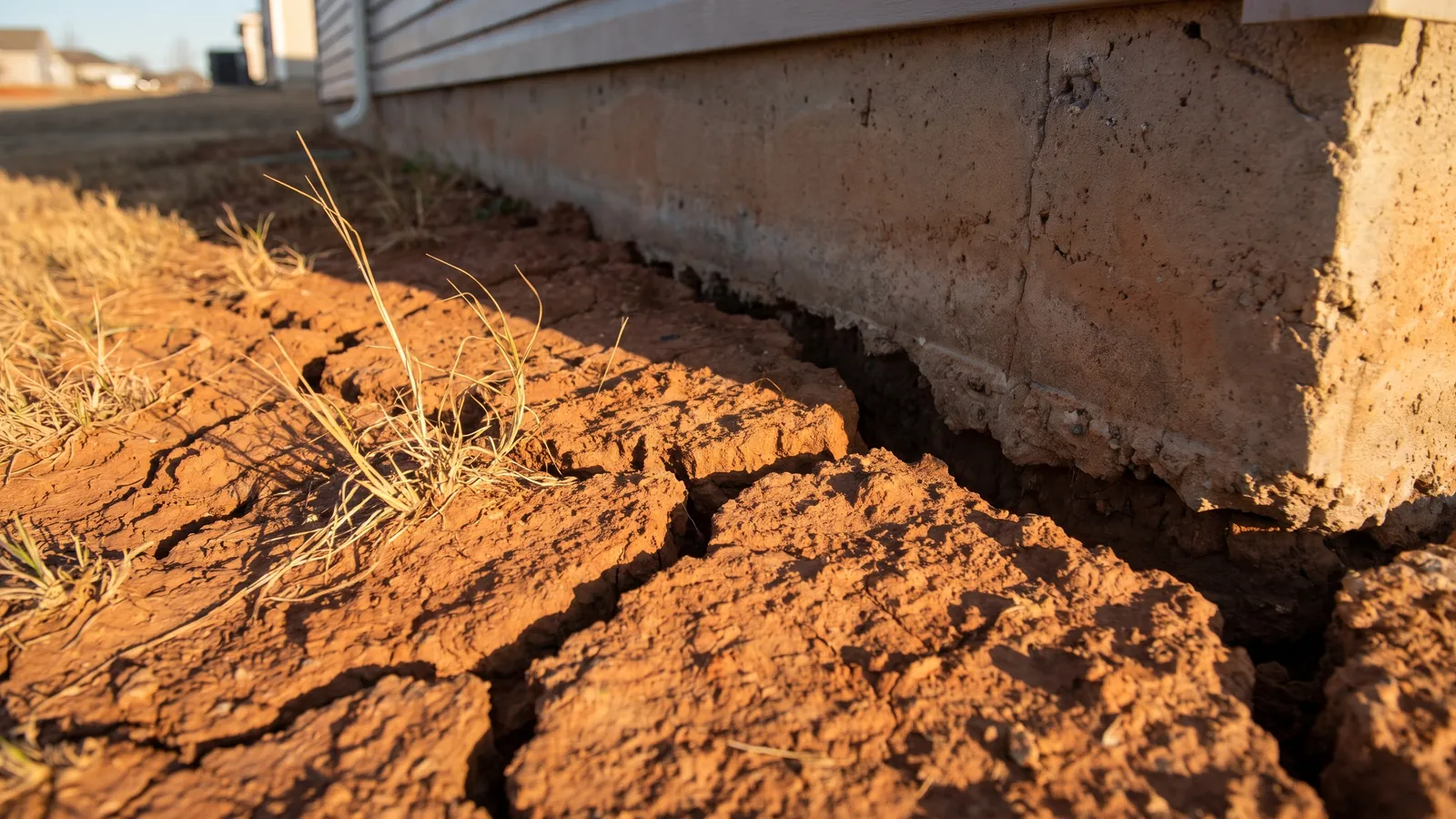
Why foundations here work harder than most
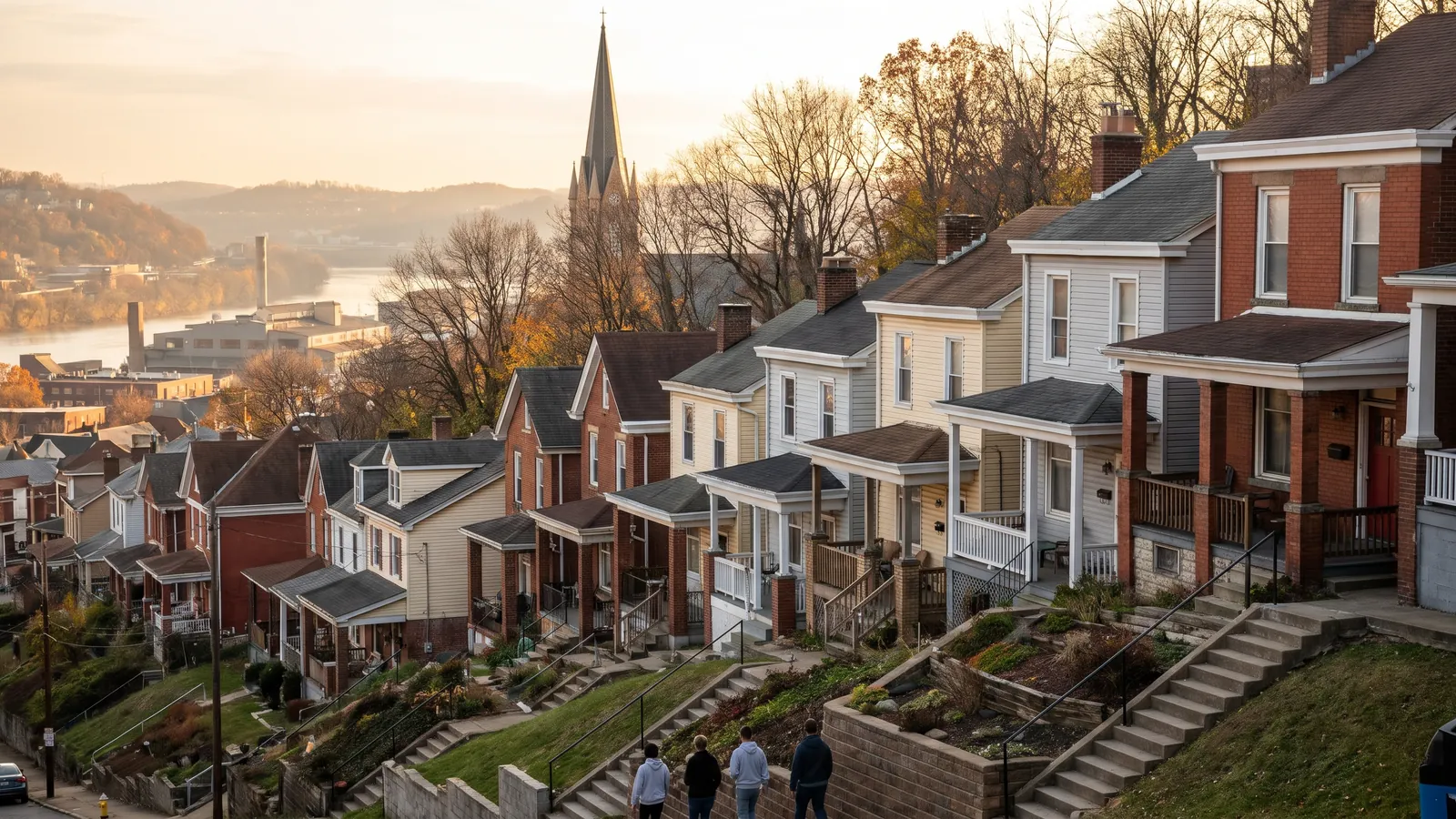
Pittsburgh houses sit on clay that moves with the seasons and on hillsides that move with gravity. The weather keeps both in play.
- ~38 in.of rain a year, spread across every month, so the clay around a basement rarely dries out
- ~28 in.of snow a year, and the melt soaks straight back into the same soil
- 28°Faverage in January, with freeze and thaw cycles from November through March that widen small cracks
- Mar – Aprspring thaw, when frozen ground lets go and water pressure on basement walls peaks
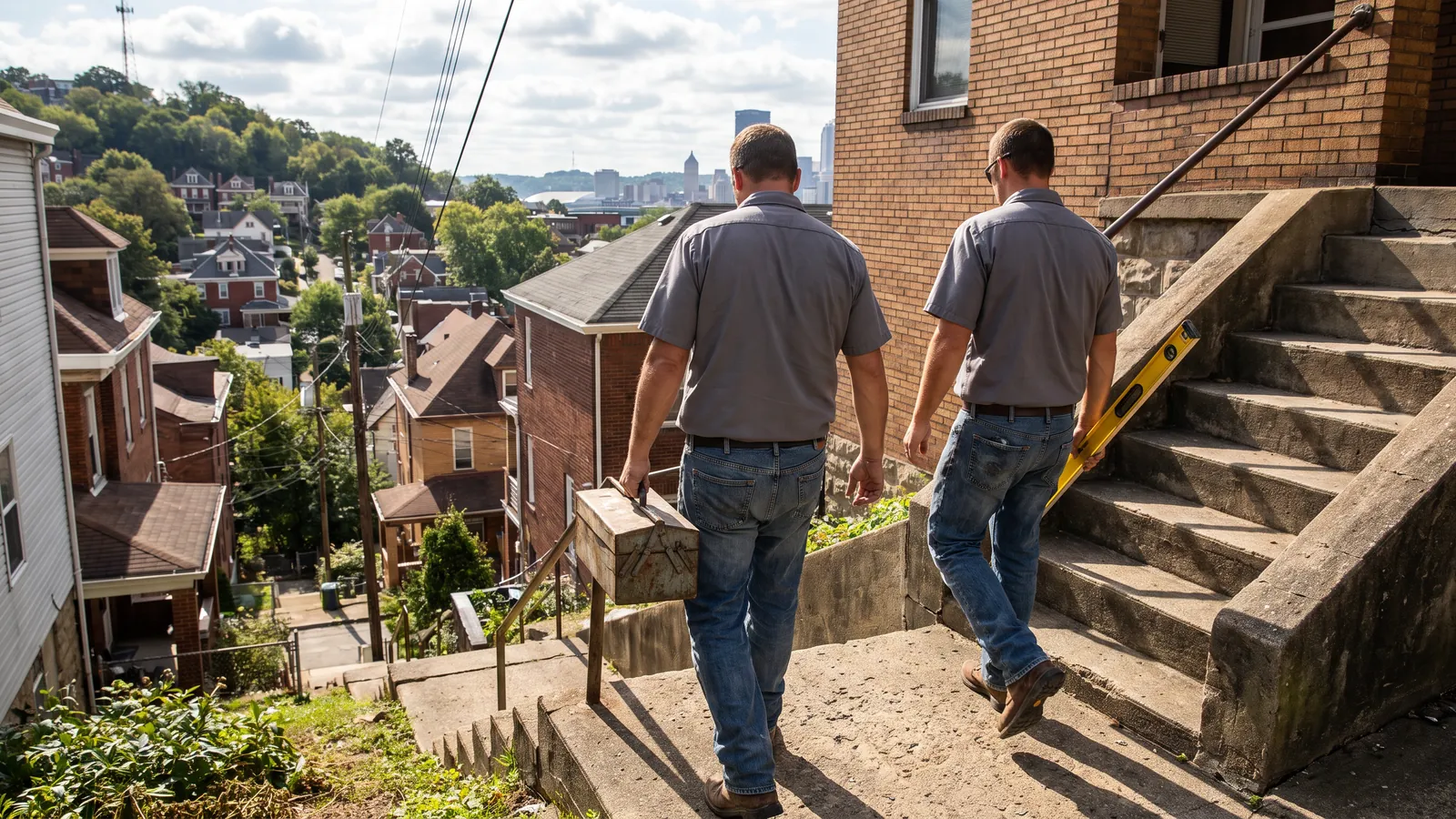
We explain the cause before we sell the cure
A crack is a symptom. So is a damp corner, a sticking door or a floor that rolls a marble toward the outside wall. Before we talk about piers or drains, we look at the whole picture: the age and type of the foundation, how the lot slopes, where the gutters dump, whether the wall is moving or just leaking, and how it changed since you first noticed it.
Many houses here are fifty to a hundred years old, on stone, block or early poured walls that were never built for modern drainage. Some need real structural work. Plenty need less than they fear. You get an honest read either way, a written price, and a crew that cleans up and tells you what to watch afterwards.
Read up before you call, or after
Plain explanations of what is going on under your house, written for Pittsburgh soil and Pittsburgh houses.
- Foundation warning signs, from minor to urgent
- Inside or outside waterproofing: which one fits
- Permits in Pittsburgh and the boroughs
- Common questions

The city, the South Hills, the North Hills and out to the turnpike towns
From hillside row houses in the city to 1950s ranches in Penn Hills and new subdivisions in Cranberry, we cover Pittsburgh and the communities around it in Allegheny County and next door.
- Mt. Lebanon
- Bethel Park
- Upper St. Clair
- Penn Hills
- Plum
- Monroeville
- Murrysville
- Ross Township
- Shaler
- McCandless
- Cranberry Township
- Moon Township
What happens after you reach out
Tell us what you see
Call or send the form. A crack, a damp wall, a sticking door. Every call is taken, 24/7, and we book a time that suits you.
Free inspection
We check walls, floors, the outside grade and the drainage, measure what is moving, and talk you through it on the spot.
Written price
The fix, the reason for it and the cost on paper, plus any permit the job needs. Nothing starts until you agree.
Work and walk-through
The crew does the job, cleans up, and shows you what was done and what to keep an eye on next spring.
What Pittsburgh homeowners ask first
Why do so many Pittsburgh basements crack and leak?
Three things stack up here. The ground is heavy clay that swells when it is wet and shrinks when it dries, so it keeps nudging the walls. Clay also holds water, which builds pressure against the outside of a basement wall. And from November to March the wet soil freezes and thaws over and over, which opens small cracks a little wider each winter. Add houses built on slopes, where the soil on the uphill side pushes harder than on the downhill side, and you get the cracked, damp and bowing walls we see every week.
Is the inspection really free?
Yes. We come to the house, look at the walls, floors and drainage inside and out, and tell you what we think is going on. If the house needs work you get a written price before anything starts. If it does not, we say so and you owe nothing.
How do I know if a crack is serious?
Thin vertical hairline cracks in a poured wall are common and often only need sealing. Pay closer attention to cracks wider than about an eighth of an inch, cracks that are wider at one end, stair-step cracks in block walls, any horizontal crack, and cracks that come back after being patched. Those point to movement or pressure. Our warning signs guide walks through them.
Do I need a permit for foundation repair in Pittsburgh?
Structural work often does. Inside the city, permits go through the Department of Permits, Licenses, and Inspections on OneStopPGH; boroughs and townships around the county run their own offices. Sealing a crack or adding a sump pump usually does not need one, while piers or rebuilding a wall usually does. When a permit is needed, we handle it. See the permits guide.
Can you fix a wet basement without digging up the yard?
Usually, yes. An interior drain along the inside of the wall, tied to a sump pump, deals with water where it enters without excavating the outside. On a steep lot, or where the wall itself also needs work, digging the outside can be the better answer. We explain both and price the one that fits the house.
When can someone come out?
Most inspections are booked within a few days. Water pouring in, a wall that is visibly moving or a door frame suddenly pulling apart goes to the front of the line. Every call is taken, 24/7, so tell us what is happening and we set a time.