A dry basement, matched to how the water is actually getting in
Water finds its way into Pittsburgh basements through cracks, through the joint where the wall meets the floor, through porous block and old stone, and over the top of window wells. Each one has a different fix.
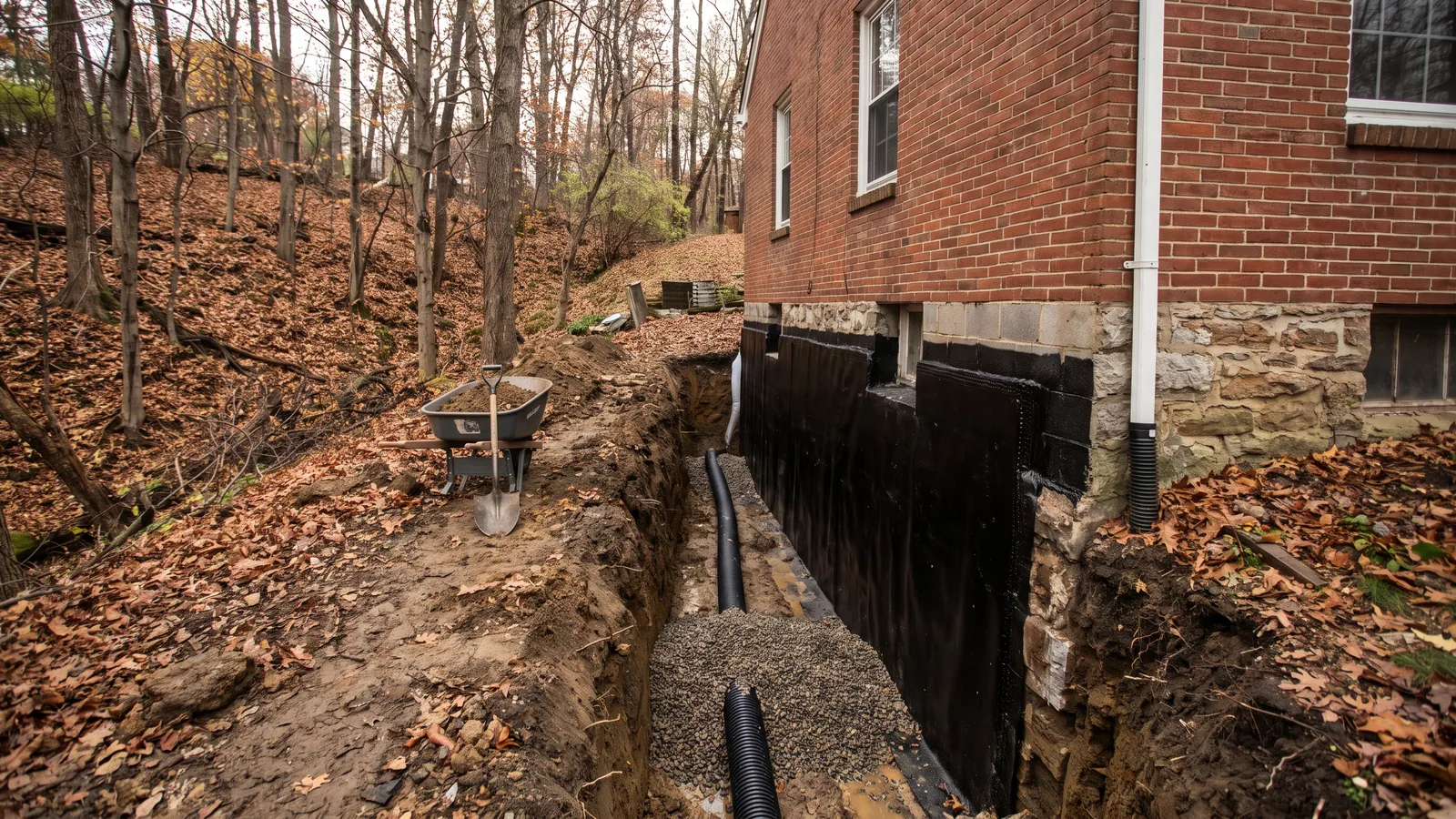
Pittsburgh gets rain in every month and a long snow season on top, and the clay soil around most basements holds that water instead of letting it drain away. The result is hydrostatic pressure: water in the soil pressing on the wall and the floor from outside. It pushes through any opening it can find, and it is strongest in March and April when the ground thaws.
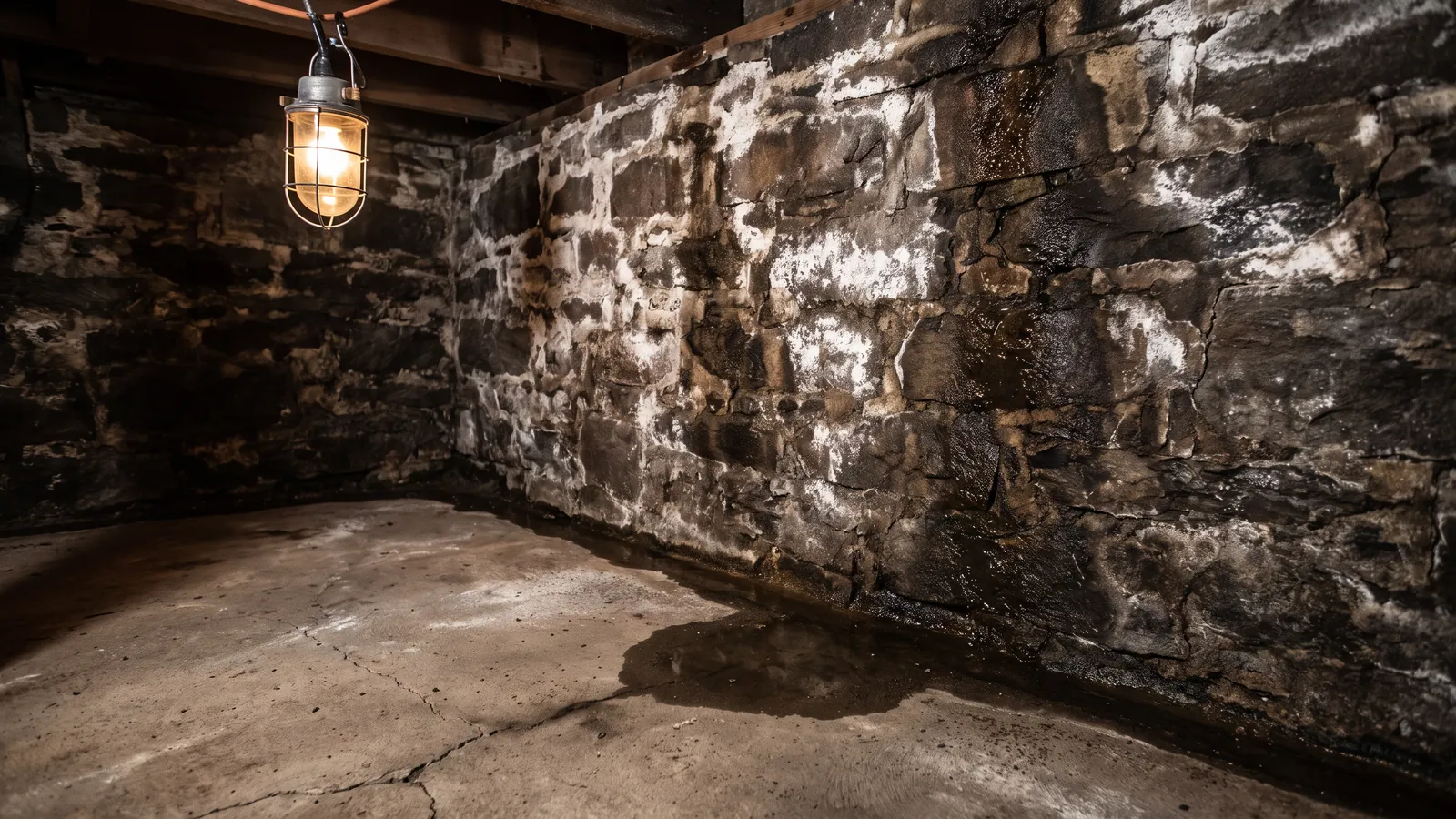
So the first job is working out the route. Water that appears along a single line on a poured wall is usually a crack. Water that spreads across the floor from the base of every wall is coming through the cove joint, where the wall sits on the footing. A block wall that darkens in patches and grows white crust is passing water through the block cores. A wet corner under a downspout is a gutter problem first. Old stone and rubble foundations, common in the city's older neighborhoods, let water through almost everywhere.
The two main approaches
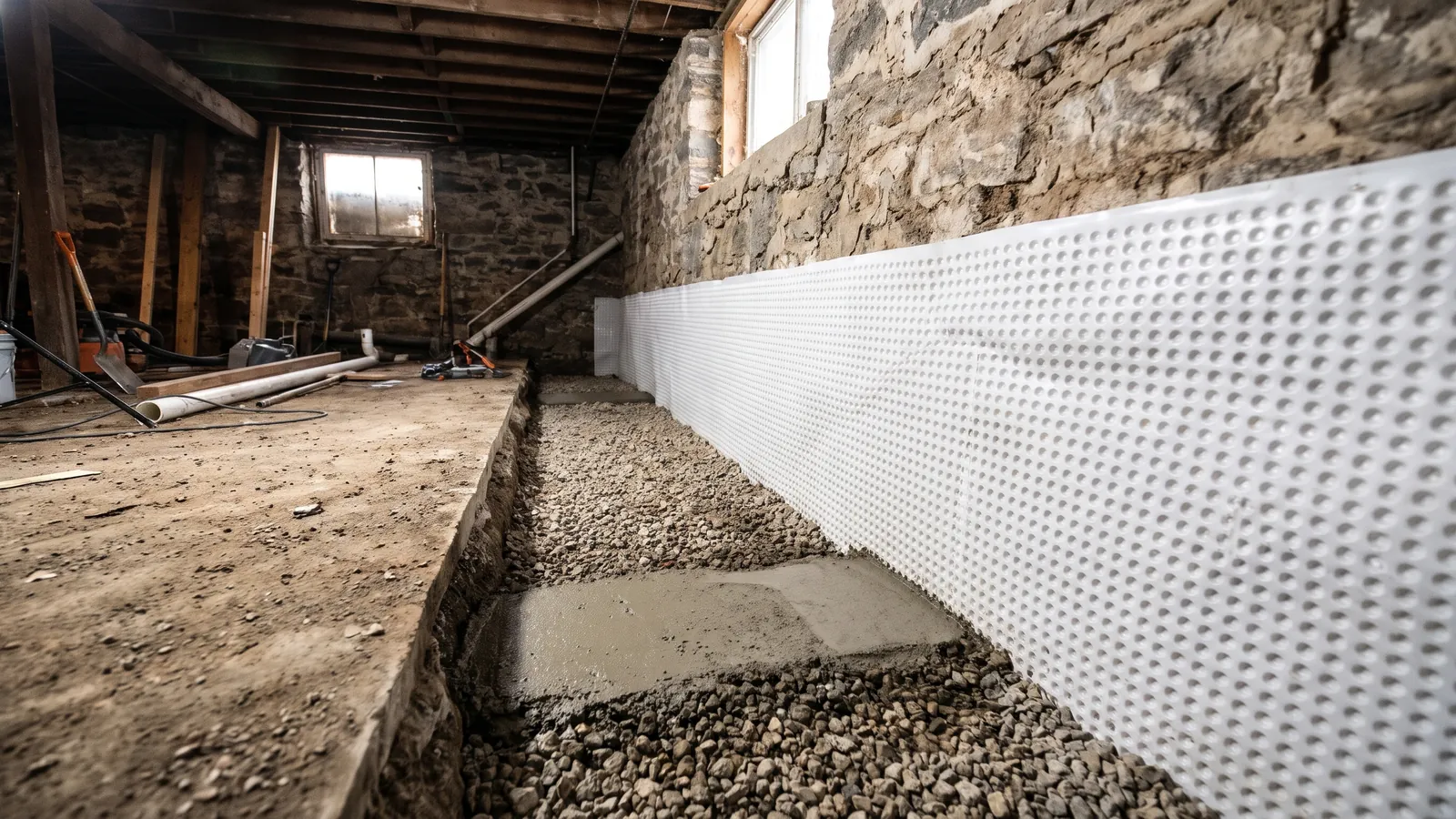
Interior waterproofing works with the water rather than against it. A channel is cut along the inside of the floor, a perforated drain is laid in gravel at the footing, a dimpled membrane on the lower wall guides seepage down into it, and the drain carries everything to a sump pump. No digging outside, no disturbed landscaping, and it handles the cove joint and porous walls at the same time. For most Pittsburgh basements it is the practical answer. See interior drainage for the details.
Exterior waterproofing stops water at the outside face of the wall. The soil is dug down to the footing, the wall is cleaned and repaired, a waterproof membrane and drainage board go on, and a footing drain is laid before backfill. It is the most complete fix, and the right one when the wall also needs outside repair, but on a steep lot with steps, porches and neighbors close by it can be a big undertaking.
Smaller fixes come first when they are enough: crack injection, longer downspout extensions, regrading so soil slopes away from the house, and window well covers and drains. We will tell you if one of those solves it.
What the job includes
Route found first
Crack, cove joint, porous block, stone, window well or gutter, each confirmed before anything is priced.
Interior systems
Perimeter drain, wall membrane and sump, installed from inside with no digging outside.
Exterior membranes
Excavation, wall repair, membrane, drainage board and footing drain where the outside approach fits.
Smaller fixes first
Crack sealing, grading and downspout changes when they are enough on their own.
Sump and backup
A pump sized for the inflow and an optional battery backup for storms and outages.
Terms in writing
What the system covers, and any warranty that applies, spelled out on the estimate before you sign.
Basement waterproofing cost in Pittsburgh
| Job | Typical range | What moves it |
|---|---|---|
| Interior perimeter drain, full basement | $6,500 – $14,000 | Basement size and floor thickness |
| Interior drain, one wall | $2,400 – $5,000 | Wall length |
| Exterior excavation and membrane (per wall) | $7,000 – $16,000 | Depth, slope, porches and access |
| Window well drain and cover | $450 – $1,100 each | Size and depth |
| Downspout extensions and regrading | $400 – $2,200 | Length and how much soil moves |
| Crack injection (per crack) | $450 – $950 | See crack repair |
Typical 2026 ranges for Pittsburgh-area houses, to help you plan. Your price comes after the free inspection, itemized and in writing, and the work starts only when you agree to it.
On the job
Questions about basement waterproofing
Interior or exterior waterproofing, which is better?
Exterior stops water before it reaches the wall; interior manages it once it does. Both work when installed properly. In most Pittsburgh houses, interior systems cost less, involve far less disruption and deal with the cove joint too. Exterior makes sense when the wall needs outside repair anyway or the yard allows easy digging.
Will waterproofing paint stop the water?
Not against real water pressure. Coatings can help with light dampness on a wall that is otherwise sound, but water pushing through from outside will lift them. We do not sell them as a fix for a wet basement.
Why is my basement only wet in spring?
Spring thaw saturates the soil, frozen ground blocks the usual drainage, and water pressure on the walls peaks. A basement that leaks only in March and April is a classic Pittsburgh pattern, and it still needs a proper fix.
Can you waterproof an old stone foundation?
Yes. Stone walls are rarely watertight, so the usual approach is an interior drain with a membrane on the lower wall, plus repointing where the mortar has failed.
Does waterproofing need a permit?
Interior drains and sump pumps usually do not. Exterior excavation can, depending on the municipality and the depth. We check before we start.
What happens if it leaks again?
Call us. Any warranty that applies to your system is written on the estimate before you sign, so you know exactly what is covered and for how long.