An interior drain catches the water where it enters, along every wall
Water in most basements comes in low, at the joint between the wall and the floor. An interior drain sits right there, under the edge of the slab, and carries it to a sump before it reaches your floor.
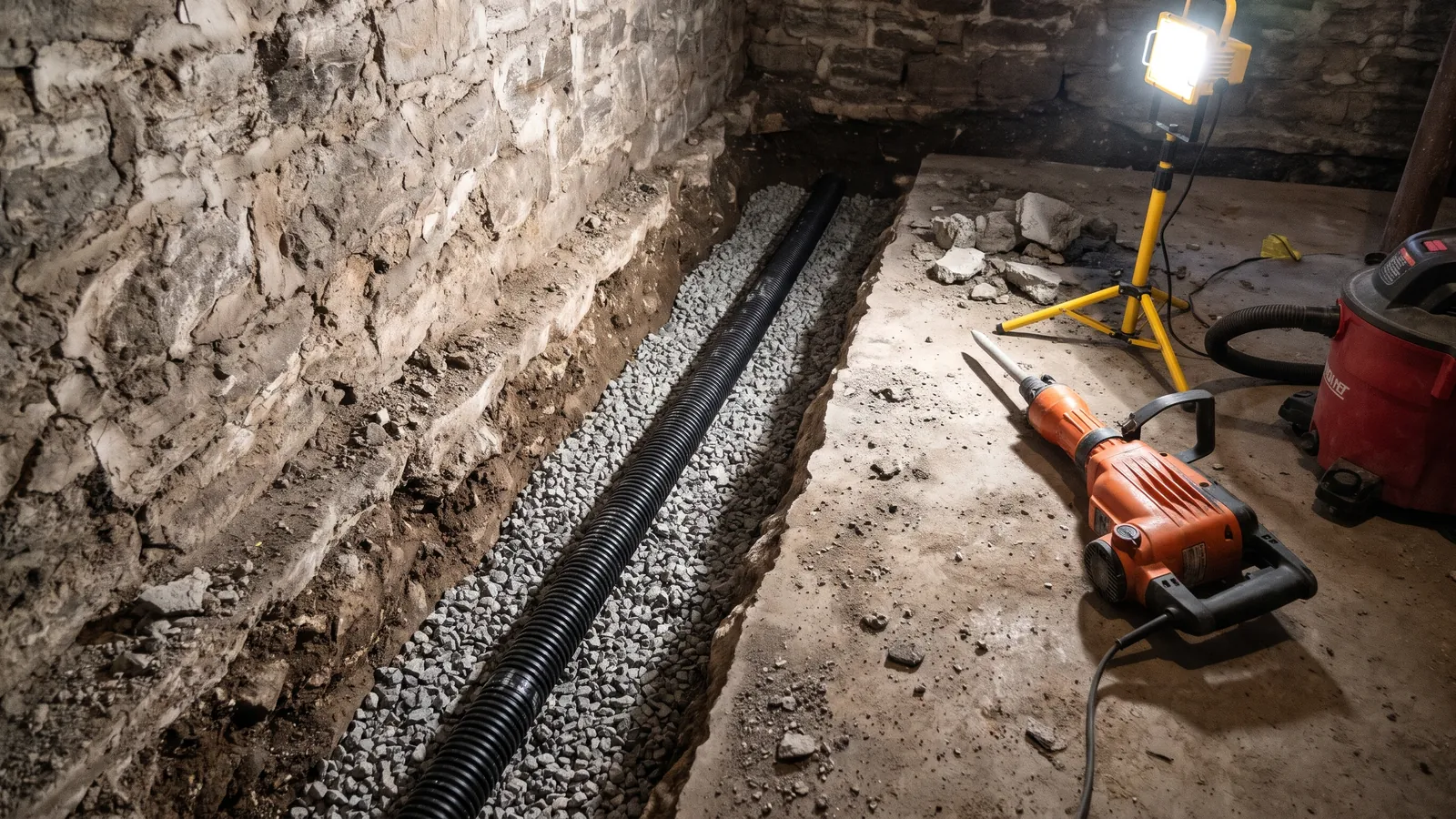
An interior drainage system, often called interior drain tile or a French drain inside the basement, is the workhorse of basement waterproofing in older cities like Pittsburgh. It does not try to make the wall watertight. It gives water a path of least resistance that leads somewhere useful.
- Cut and remove a strip of the concrete floor, typically about a foot wide, along the walls that need it.
- Dig down beside the footing, clear out the old soil and set a bed of clean washed stone.
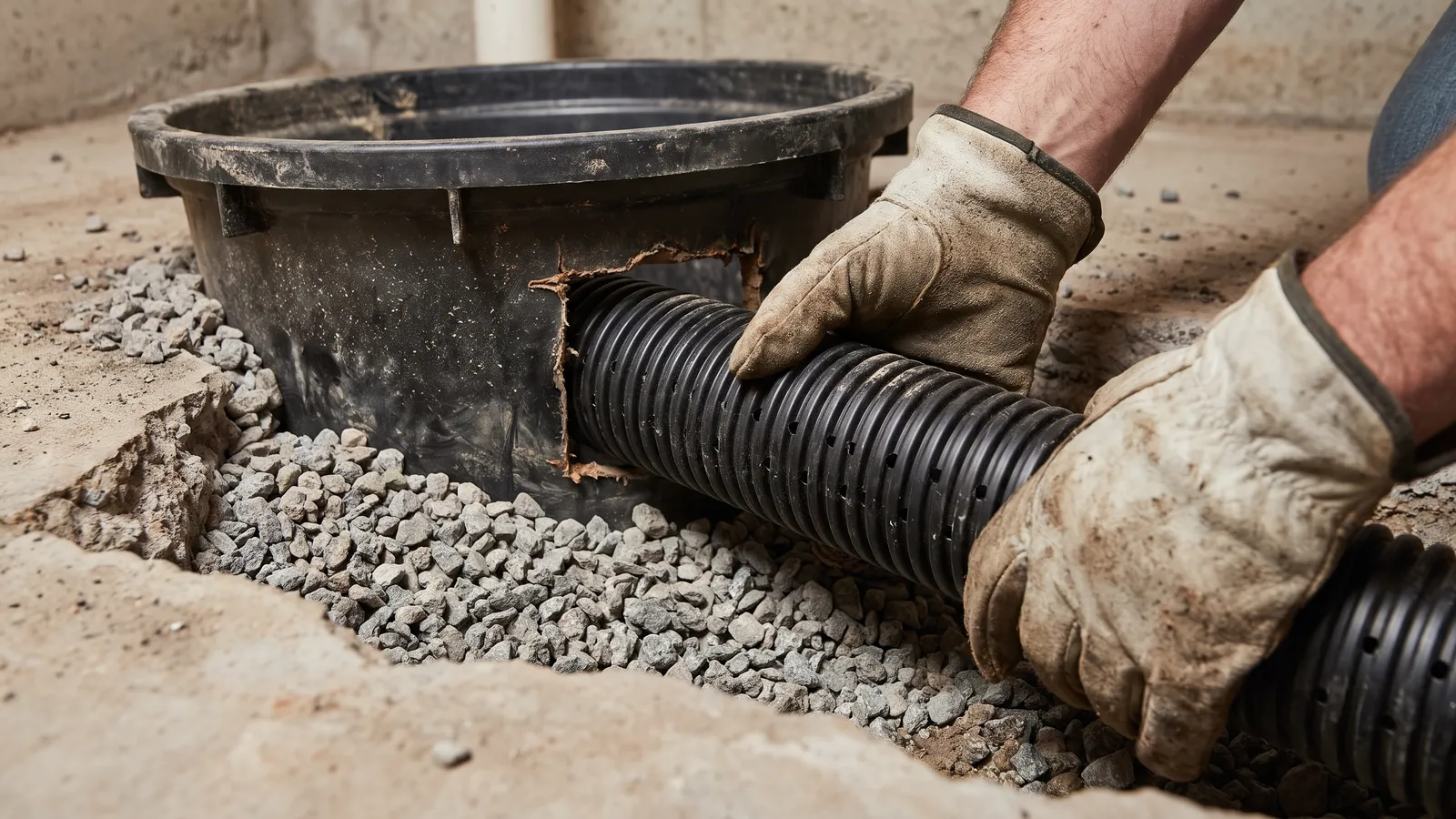
- Lay perforated pipe in the stone, pitched toward the sump, with clean-out access so it can be flushed later.
- Fit a dimpled membrane against the lower wall so water coming through the wall or the cove joint runs down behind it into the drain.
- Tie it into a sump, either an existing one if it is sound or a new sealed basin and pump.
- Pour new concrete over the trench, finished flush with the floor.
Most single basements are done in one to three days, and the dust is controlled with plastic sheeting and vacuum-equipped cutting. You keep the use of the rest of the house throughout.
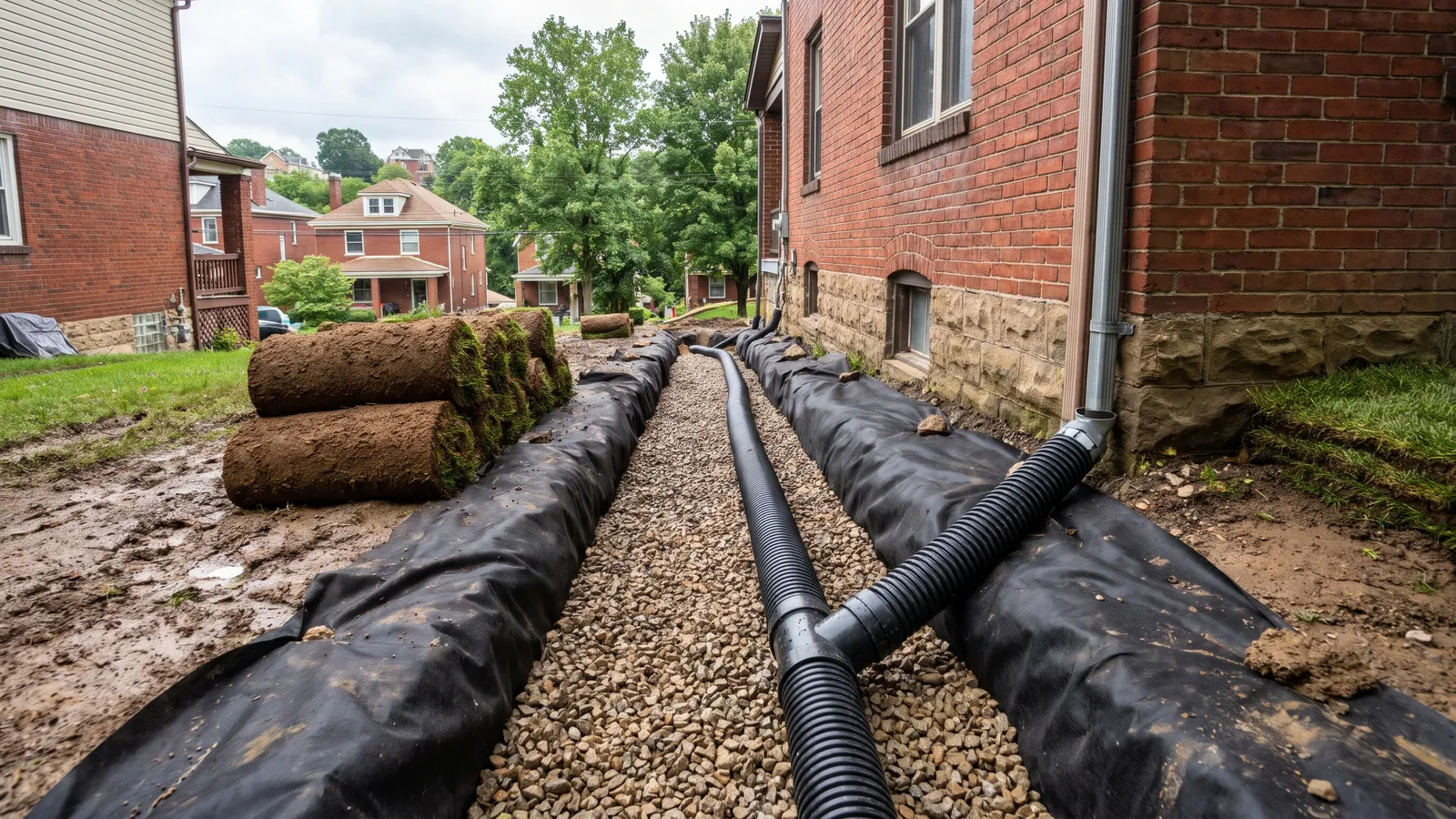
A drain does not stop a wall from moving, so if a wall is also bowing or cracking, that is handled as part of the same plan, usually with straps or anchors installed before the membrane goes on. And outside, it pays to send downspouts well away from the house so the drain is not doing work the gutters should do.
What the job includes
Full or partial perimeter
Only the walls that leak, or all four when the water comes from everywhere.
Washed stone bed
Clean gravel around the pipe so silt does not clog it for years.
Wall membrane
Seepage from the wall and the cove joint guided down behind it into the drain.
Clean-out ports
Access points so the drain can be flushed if it is ever needed.
Sealed sump
A lidded basin that keeps moisture and soil gas out of the basement air.
Floor restored
New concrete over the trench, finished flush and swept clean.
Interior drainage cost in Pittsburgh
| Job | Typical range | What moves it |
|---|---|---|
| Interior drain, per linear foot | $55 – $95 | Floor thickness and soil |
| Typical full basement (about 120 ft) | $6,500 – $11,500 | Plus sump if needed |
| New sealed sump basin and pump | $1,000 – $1,900 | If no usable sump exists |
| Wall membrane, per linear foot | $8 – $18 | Height up the wall |
| Bowing wall bracing before the drain | Priced separately | See bowing wall repair |
Typical 2026 ranges for Pittsburgh-area houses, to help you plan. Your price comes after the free inspection, itemized and in writing, and the work starts only when you agree to it.
On the job
Questions about interior drainage
How long does an interior drain last?
Installed with clean stone and a sealed sump, decades. The parts that wear are the pump and its switch, which are replaceable.
Will it make a mess in my house?
Cutting concrete is dusty, so we seal the work area with plastic, use vacuum-equipped saws, and clean up each day. Most families stay in the house and barely notice once the cutting is done.
Do I need it on all four walls?
Not always. If water comes in on one or two walls, the drain can cover just those. If it comes from the cove joint everywhere, the full perimeter is the lasting fix.
Can I finish my basement afterwards?
Yes, that is often the reason to install it. The membrane lets you frame and insulate in front of the wall with the drainage path left open.
What if my basement has no sump?
We install a new sealed basin and pump at the low point and run the discharge outside, away from the foundation.
Is this the same as a French drain?
It works on the same idea, a perforated pipe in stone, but placed inside along the footing. An outdoor French drain catches surface and ground water in the yard before it reaches the house.