Foundation warning signs: what to watch, what to fix, what to ignore
Old houses creak and crack. Some of it is harmless and some of it is the start of a real problem. This guide sorts the signs into three groups so you know which is which.
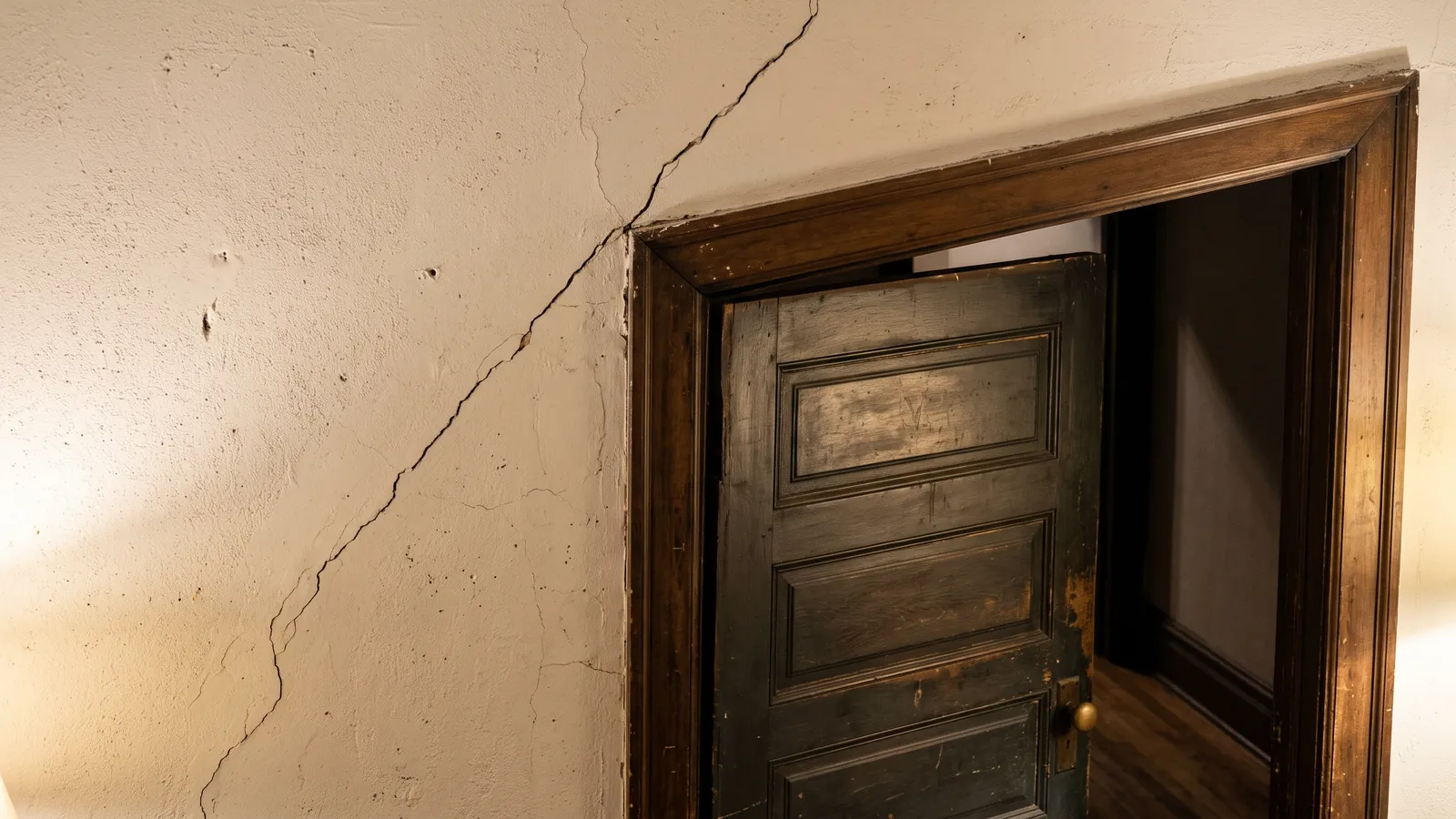
Usually minor: keep an eye on it
- Thin vertical cracks in a poured basement wall, the same width top to bottom. Typical shrinkage. Seal them if they leak.
- Hairline plaster cracks in an old house that have been there for years and are not growing.
- A slight, even slope across an old floor that has not changed.
- Doors that stick only in humid summer weeks. Often wood swelling, sometimes small seasonal soil movement.
A simple test for any crack: draw a pencil line at each end and write the date. If the crack runs past the marks months later, it is growing.
Worth an inspection soon
- Horizontal cracks in a block wall, usually a few courses below the top. The first sign of bowing.
- Stair-step cracks through mortar joints, especially near corners.
- Cracks wider than about an eighth of an inch, or wider at one end than the other.
- Cracks that come back after being patched.
- Diagonal cracks running up from the corners of doors and windows, inside or in exterior brick.
- Doors and windows that no longer latch or have uneven gaps at the top.
- Floors sloping enough to notice, or gaps opening under baseboards.
- Water in the basement after rain or every spring, or white crust on the walls.
- A porch, stoop or chimney pulling away from the house.
Call promptly
- A basement wall visibly bulging inward, or blocks pushed out of line.
- A crack that has widened quickly in weeks rather than years.
- A wall that has shifted at the bottom, sliding inward at the floor.
- A door frame suddenly racking or a window cracking on its own.
- Water pouring in, not seeping.
Most of these are not emergencies in the sense of minutes, but they are not things to leave for another year. If pieces of a wall are falling, stay out of that part of the basement and call.
Why Pittsburgh houses show these more
Clay soil, hillsides and long freeze-thaw winters load foundations harder here than in many places, and many houses are old enough that their walls have been taking it for a century. Our clay soil guide explains the mechanics. A free inspection tells you which group your signs belong in.
Questions people ask
How do I know if a crack is growing?
Mark both ends with a pencil and the date, and measure the width with a coin or a ruler. Check again after a season. Growth means movement.
Are cracks in brick outside a foundation problem?
Stair-step cracks in exterior brick, especially above windows and doors or near corners, often reflect foundation movement. Isolated cracked bricks may just be weathering.
Is a sloping floor always the foundation?
No. In older houses a sagging beam, a sunken basement post or cut joists can cause it. An inspection separates framing from foundation problems.
Should I worry about a damp basement with no cracks?
Dampness without cracks usually means water through porous block or at the floor joint. It is a water problem, not a structural one, but it can lead to both over time.
Keep reading: Clay soil guide · Foundation crack repair · Free structural inspection