Sunken slabs lifted back into line, before they send water at the house
A walk or patio that sinks toward the foundation is a trip hazard and a funnel, pouring rain straight against the basement wall. Lifting it is faster and cheaper than replacing it.
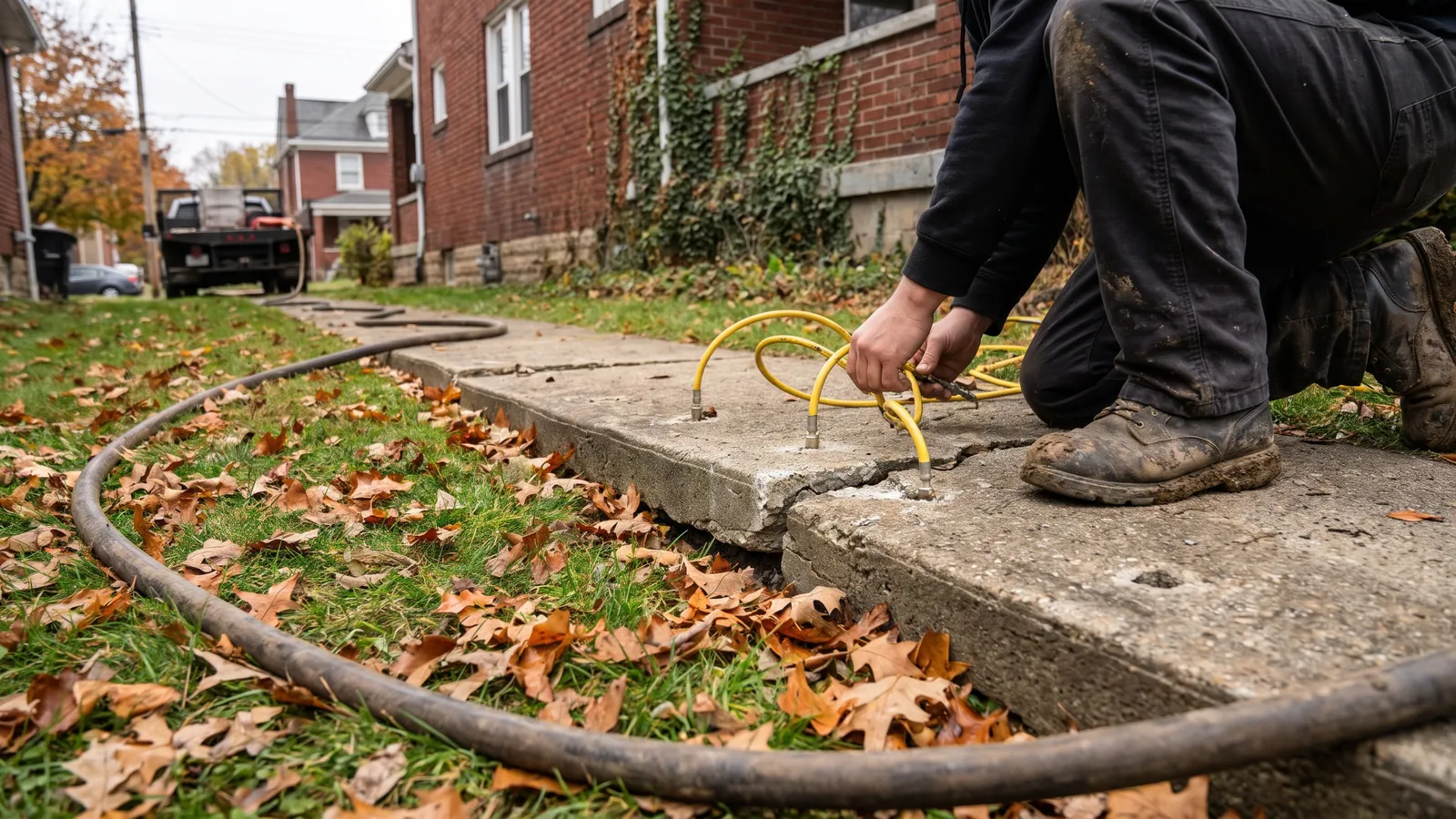
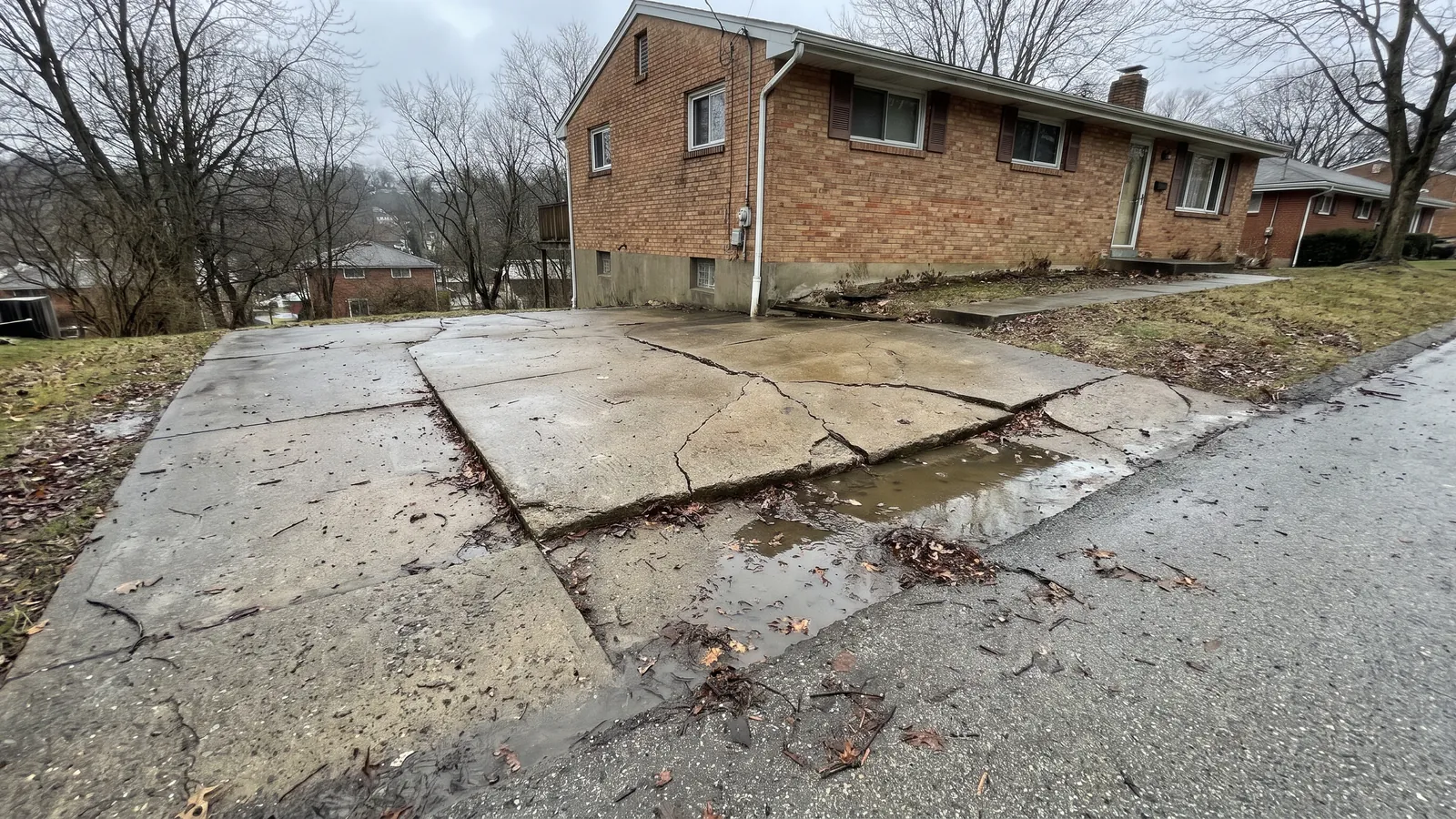
Outdoor slabs in Pittsburgh sink for the same reasons foundations move: clay that shrinks and swells, fill soil that was never compacted, and water running underneath through cracks and joints until it washes out a void. On hillside lots, front walks and steps often sit on the loosest fill of all. Once a slab tilts toward the house, it starts directing water at the foundation, and the problem feeds itself.
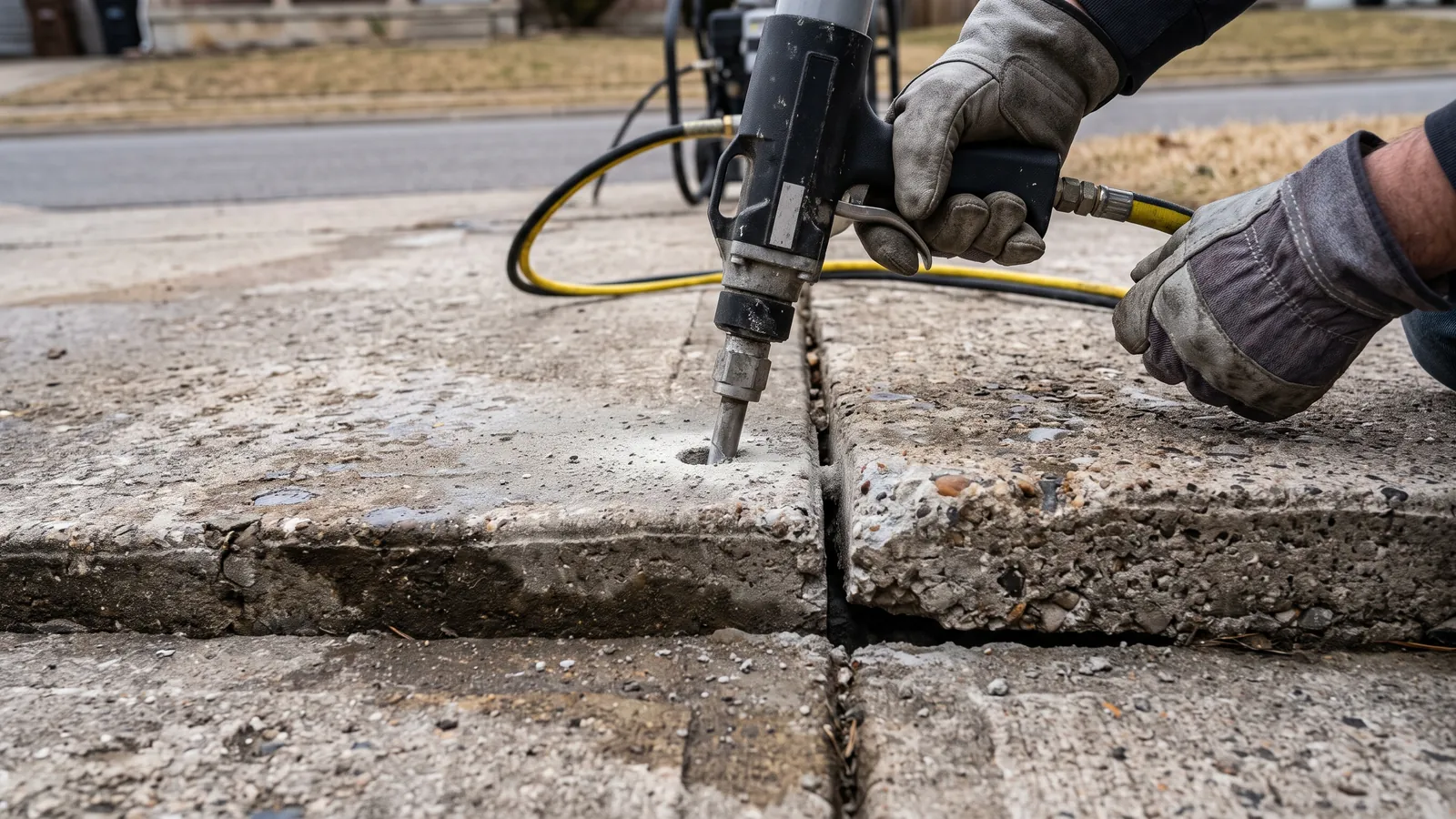
We lift slabs one of two ways. Mudjacking pumps a cement-based slurry through holes about an inch and a half wide, filling the void and raising the slab. It is economical and suits large slabs with good support around them. Polyurethane foam lifting injects an expanding foam through holes about the size of a pencil. It weighs far less, cures in minutes, and is our choice where the soil underneath is weak or the slab is near the house and we want precise control.
After the lift, the holes are patched, the joints and cracks are sealed so water cannot get back underneath, and where needed the slab is pitched slightly away from the house. Slabs that are broken into many pieces or crumbling are not good candidates, and we will tell you when replacement is the honest answer.
What the job includes
Cause checked
Washout, poor fill or clay movement, plus where the water under the slab is coming from.
Mudjacking or foam
Slurry for big, well-supported slabs; light foam for weak soil and close to the house.
Controlled lift
Raised in small steps with levels on the slab, so it does not crack further.
Pitched away
Slabs set to shed rain away from the foundation.
Joints sealed
Cracks and joints sealed so water cannot wash out the base again.
Same-day use
Foam-lifted slabs can usually be walked and driven on the same day.
Concrete leveling cost in Pittsburgh
| Job | Typical range | What moves it |
|---|---|---|
| Front walk or stoop section, foam | $650 – $1,600 | Size and void depth |
| Patio, mudjacking | $900 – $2,400 | Area |
| Driveway slab, foam | $1,100 – $2,800 | Size and thickness |
| Concrete steps, lifted and sealed | $700 – $1,800 | Number of steps and fill |
| Joint and crack sealing after lift | $150 – $500 | Length of joints |
Typical 2026 ranges for Pittsburgh-area houses, to help you plan. Your price comes after the free inspection, itemized and in writing, and the work starts only when you agree to it.
On the job
Questions about concrete leveling
Is lifting cheaper than replacing?
Usually, often by half or more, and it avoids tearing out and re-pouring. Replacement is the better buy only when the slab is badly broken.
Mudjacking or foam: which is better?
Both work. Foam is lighter, more precise and cures fast, which matters on weak soil or near the house. Mudjacking costs less on large slabs with solid ground underneath.
Will the holes show?
They are patched with matching material. Foam holes are small and easy to miss; mudjacking holes are a bit larger but still discreet.
Can you lift my garage floor or basement floor?
Often, yes, with foam. Interior slabs that have dropped are lifted the same way, with extra care around drains and walls.
Why does my patio keep sinking?
Water is washing out the base or the fill is settling. Sealing joints and fixing downspouts that drain onto it are as important as the lift.
How soon can I use it?
Foam-lifted slabs are usually ready within an hour or two. Mudjacked slabs are often ready the same day, with heavy vehicles kept off for a day.