When part of the house drops, the fix goes under it
A corner that settles pulls the rest of the house with it: cracked brick over the windows, a floor you can feel slope, a door that no longer latches. We measure how far it has gone and whether it is still going.
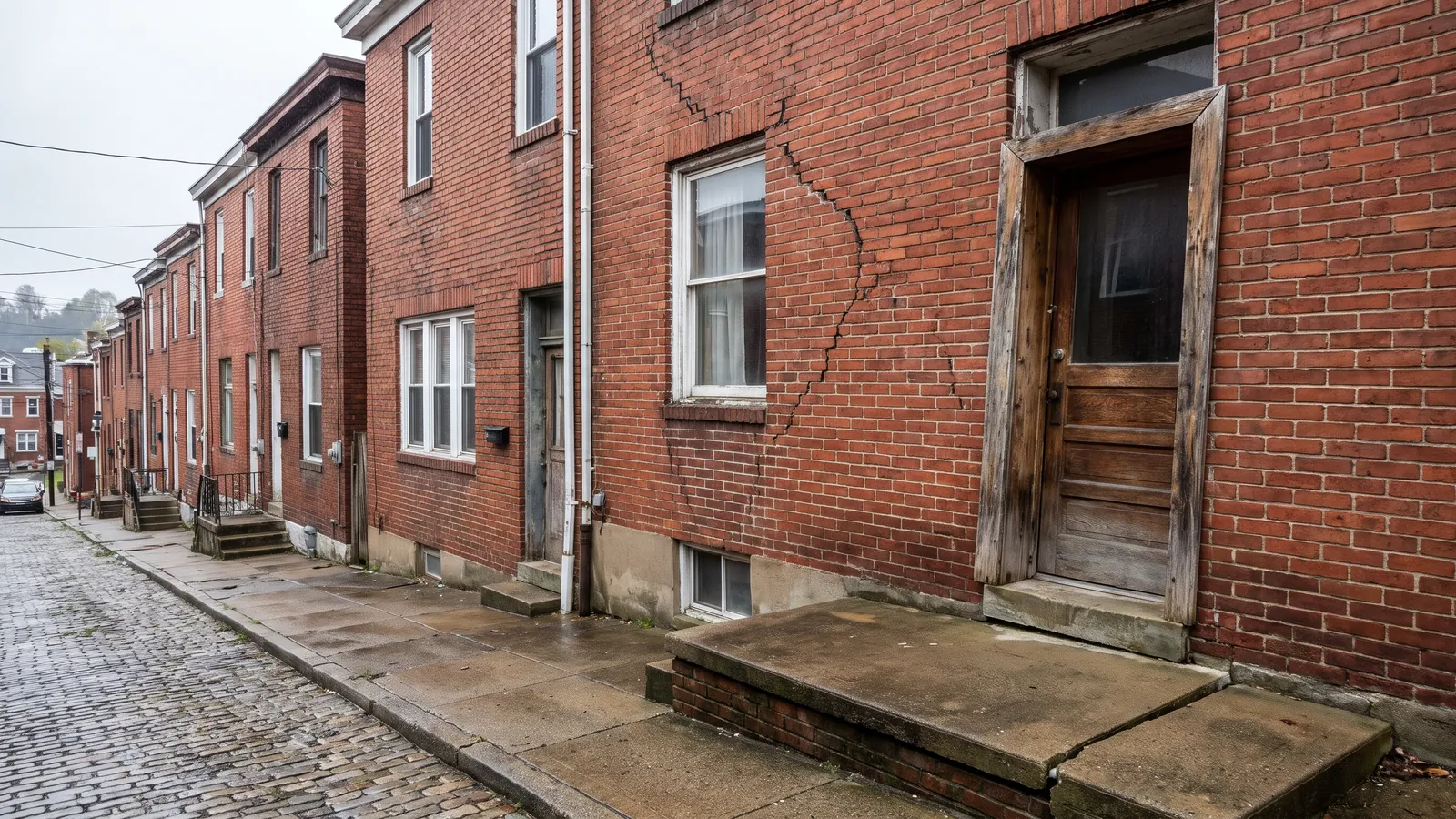
Every house settles a little after it is built. What we are called about is uneven settling, where one part of the foundation sinks more than the rest. In Pittsburgh the usual causes are close to home: clay that shrinks in a dry August and swells again in a wet spring, fill soil on a hillside lot that was never compacted, a downspout that has been soaking one corner for twenty years, or an old sewer or water line leaking under the footing.
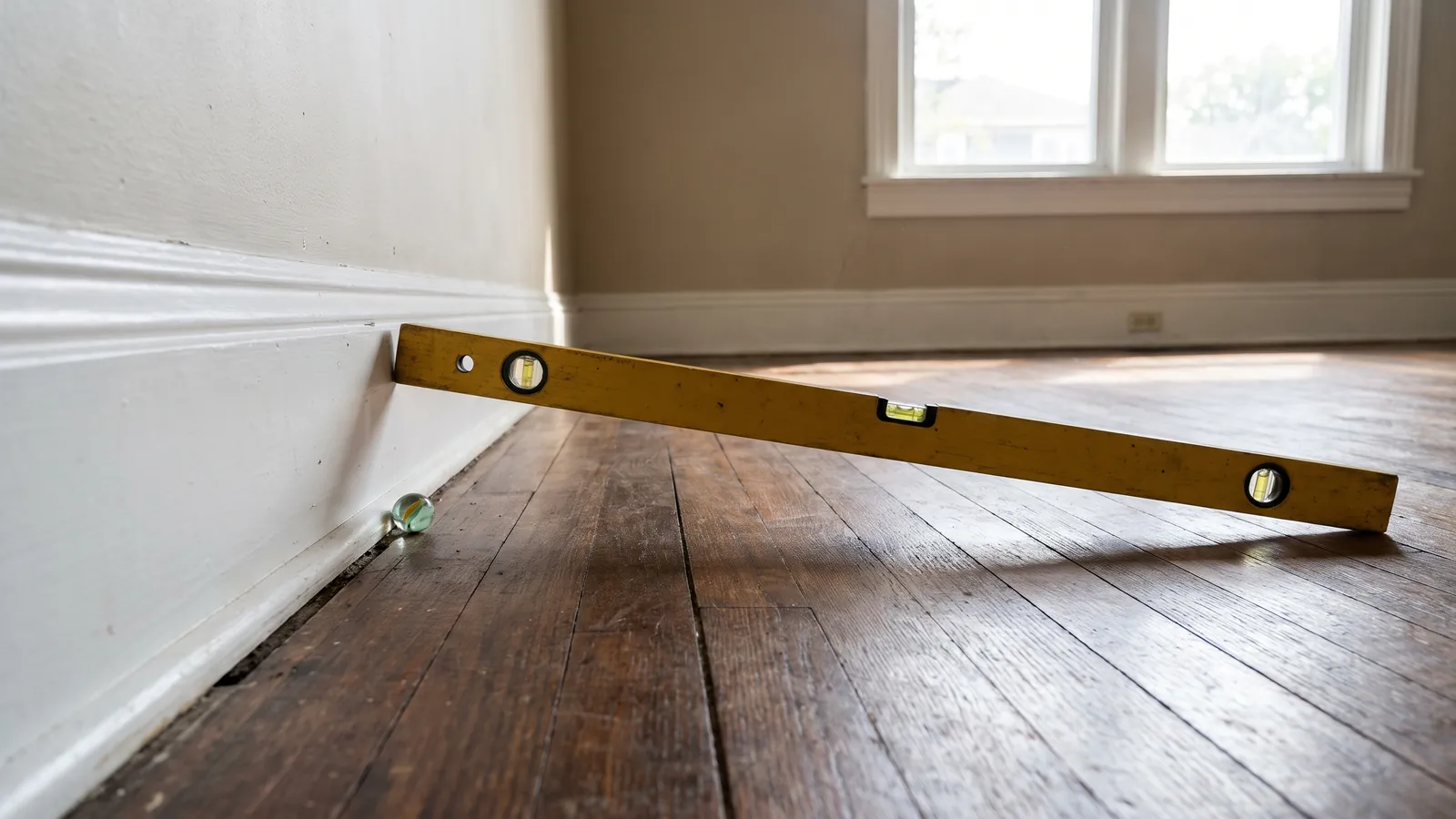
The house shows it before the foundation does. You will notice diagonal cracks running up from the corners of windows and doors, in plaster inside or in the brick outside. Interior doors that swing open on their own or will not latch. Gaps between the baseboard and the floor, or between the chimney and the wall. Floors that slope enough that a marble rolls away. On a hillside house, the downhill side is where we look first.
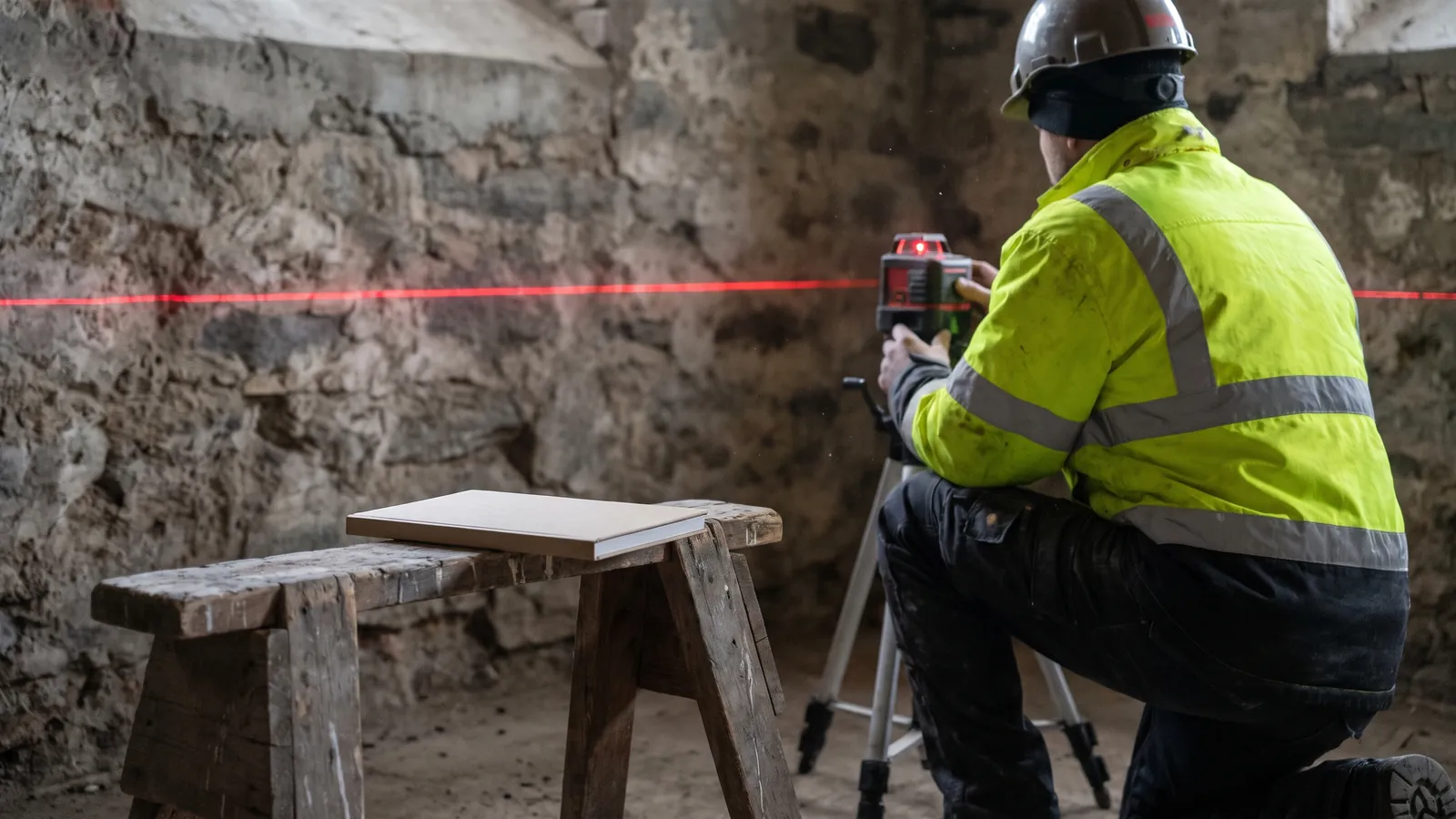
Our inspection uses a floor elevation survey: readings across every room, so we can see the shape of the settling instead of guessing from one crack. We also look at what changed: new gutters, a removed tree, a patio that now sheds water toward the house. Then you get one of three answers. Some settling is old and stable, and the house needs only cosmetic repairs and better drainage. Some is ongoing but mild, and fixing the water around that corner is enough. And some needs the footing carried down to firm ground with piers, which can also bring the corner back up part or most of the way.
What the job includes
Elevation survey
Readings across every floor so the pattern of settling is on paper, not guessed.
Cause found
Clay shrink and swell, poor fill, water, leaking lines or a failing footing.
Honest options
Stable settling is left alone and monitored. Active settling gets fixed.
Support to firm ground
Piers placed under the footing where the soil above can no longer carry it.
Lift where safe
Corners raised gradually while we watch brick, plaster and pipes.
Water fixed too
Downspouts, grading and drains sorted so the same corner does not drop again.
Settling and sinking foundations cost in Pittsburgh
| Job | Typical range | What moves it |
|---|---|---|
| Floor elevation survey with written findings | Free with inspection | Report letters priced separately |
| Drainage fix at one corner (downspout, grading) | $600 – $2,200 | Length of extension and slope |
| Piers under one corner (3–4 piers) | $5,500 – $12,000 | Depth to firm soil and access |
| Interior support posts or beam work | $1,200 – $4,500 | Span and number of posts |
| Brick crack repointing after stabilizing | $500 – $1,800 | Area and brick type |
Typical 2026 ranges for Pittsburgh-area houses, to help you plan. Your price comes after the free inspection, itemized and in writing, and the work starts only when you agree to it.
On the job
Questions about settling and sinking foundations
Is my house still settling or did it stop?
One set of readings cannot always tell. If cracks have sharp clean edges, or paint has split recently, it is likely active. Where it is unclear, we mark the cracks and recheck after a season, which costs you nothing.
Will piers lift my house back to level?
Often part of the way, sometimes most of it. We lift slowly and stop when brick, plaster or plumbing tell us to. Bringing a house back perfectly level after decades is rarely wise.
Why does my door stick only in summer?
Seasonal sticking points to the clay shrinking and swelling under the house. Small seasonal movement is common here. If it gets worse year after year, the house is still moving and should be checked.
Can a leaking pipe cause settling?
Yes. A leaking water or sewer line under or beside the footing softens the soil or washes it away. We check for signs of it and tell you if a plumber should camera the line.
Is a sloping floor always a foundation problem?
No. In older houses it can be a sagging beam, a cut joist or a failed post in the basement. Those are cheaper fixes, and our inspection separates them from true foundation settling.
How long does settling repair take?
Drainage fixes take a day. Piers under a corner usually take two to four days, including digging, installing, lifting and backfilling.