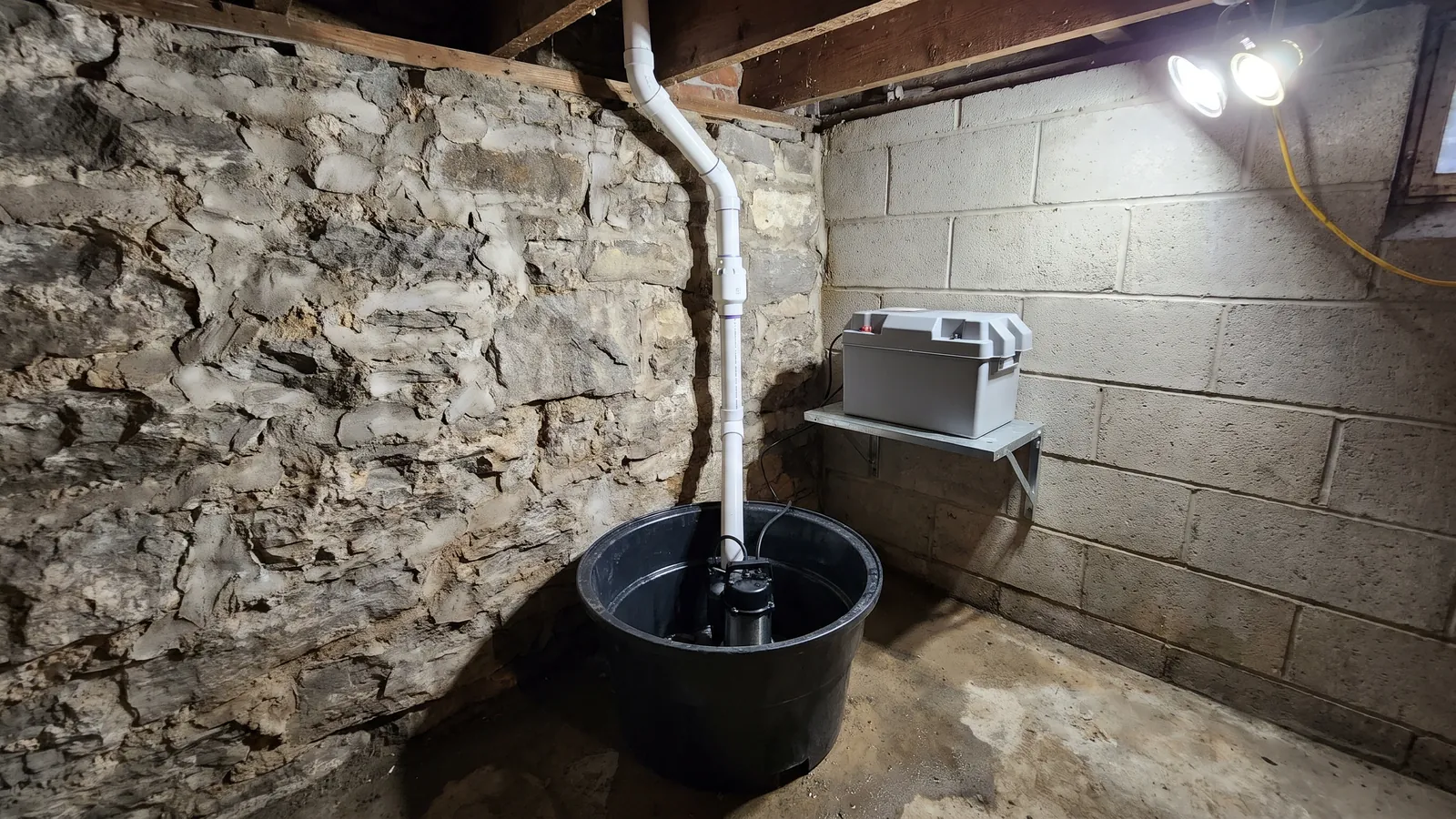
A sump pump sits in a basin at the low point of the basement, collects water from the drain tile or the soil beneath the floor, and pumps it outside. When it works, you forget it is there. When it stops, the water it was handling comes up through the floor within hours.
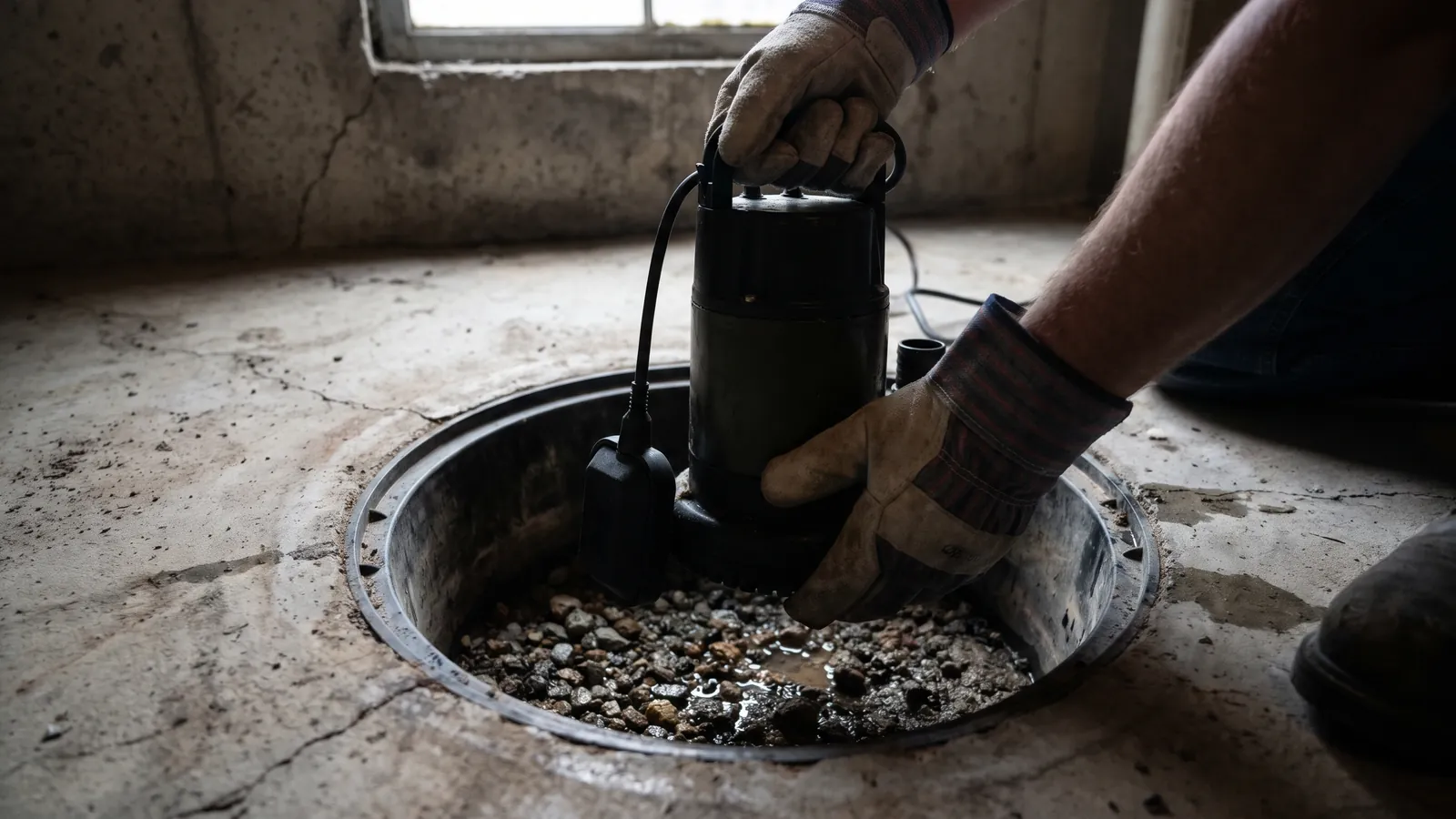
The common failures are simple: a float switch that sticks against the side of the basin, a pump that has run itself out after years of spring thaws, a check valve that lets water fall back and makes the pump cycle constantly, a discharge line that freezes in January, and the big one, a power outage in the middle of a storm. We look at all of it, not just the pump.
- Primary pump sized to the inflow and the height it has to lift water, with a vertical or tethered switch that cannot catch on the basin wall.
- Sealed lid on the basin to keep humidity and soil gases out of the basement and children's hands out of the pit.
- Battery backup pump that switches on if the main pump fails or the power drops, with an alarm so you know it is running.
- Check valve and discharge routed out through the rim joist and carried well away from the foundation, with a freeze-proof outlet so winter ice does not back it up.
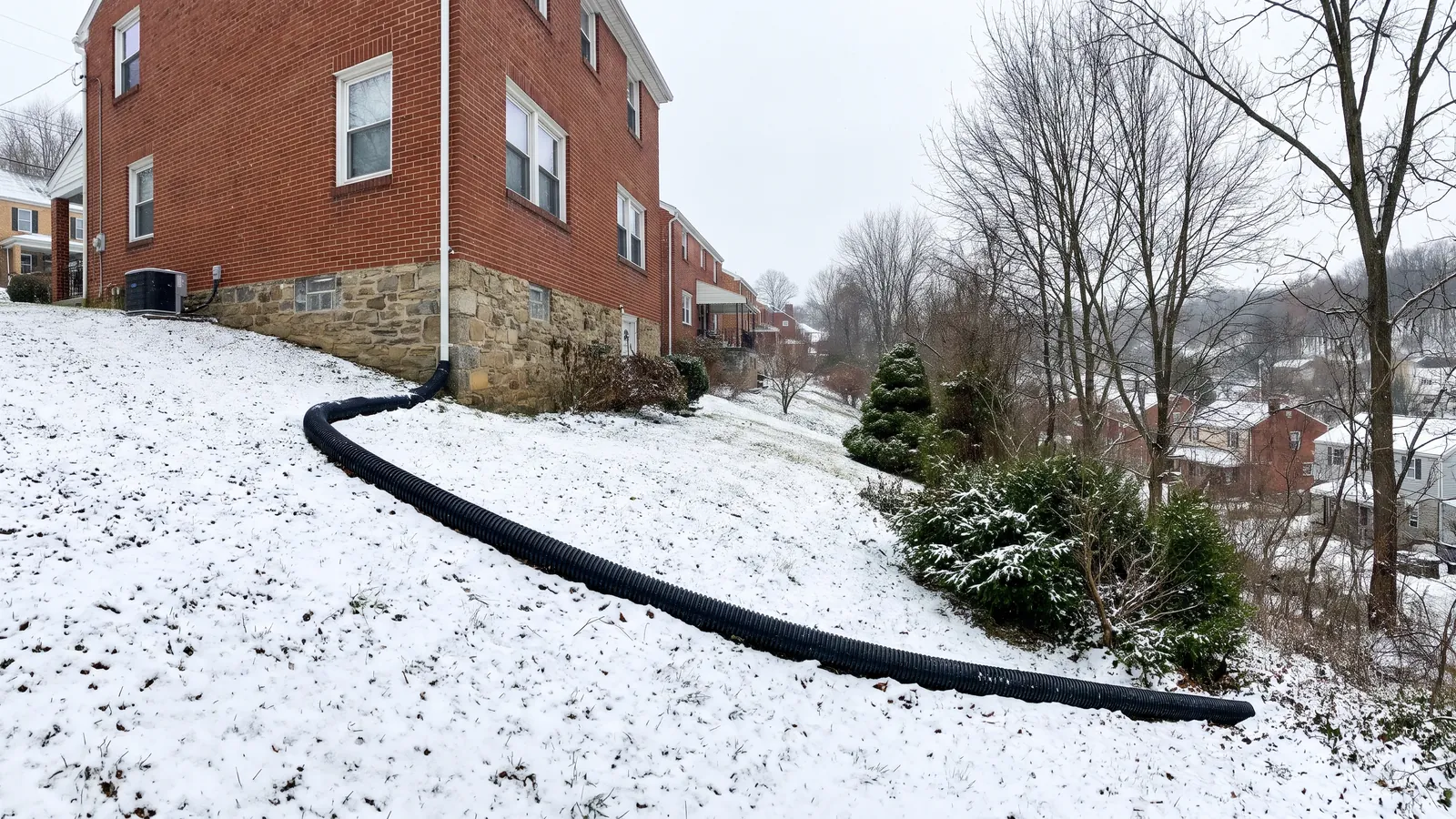
If the discharge currently dumps beside the house, it is probably feeding the same soil that the pump is trying to drain. Extending it, or burying the line so it outlets down the slope, is usually part of the job.
What the job includes
Sized to the job
Pump capacity matched to how much water comes in and how high it has to go.
Switch that will not stick
Vertical or tethered float switches set clear of the basin walls.
Battery backup
A second pump that runs on its own battery through outages, with an alarm.
Sealed basin
Airtight lid to keep damp air and soil gases out of the house.
Freeze-proof discharge
Outlet arranged so January ice does not block the line.
Water sent away
Discharge carried away from the foundation instead of back into the same soil.
Sump pumps cost in Pittsburgh
| Job | Typical range | What moves it |
|---|---|---|
| Sump pump replacement (existing basin) | $650 – $1,200 | Pump type and plumbing |
| New sump basin and pump | $1,000 – $1,900 | Floor cutting and depth |
| Battery backup pump added | $700 – $1,500 | Battery size and alarm |
| Primary pump with battery backup, installed | $1,400 – $2,600 | Our usual recommendation |
| Buried discharge extension | $450 – $1,400 | Length and slope of yard |
| Check valve and discharge repair | $200 – $450 | Access |
Typical 2026 ranges for Pittsburgh-area houses, to help you plan. Your price comes after the free inspection, itemized and in writing, and the work starts only when you agree to it.
On the job
Questions about sump pumps
How long do sump pumps last?
Often seven to ten years, less in houses where the pump runs a lot every spring. If yours is older than that and has not been tested, it is worth a look before the thaw.
Do I really need a battery backup?
If water comes in during heavy storms, yes. Storms and outages tend to arrive together, and a primary pump without power does nothing. A backup is the cheapest insurance in the basement.
My sump pump runs constantly. Is that bad?
It can mean a lot of water, which may be normal in spring, or a stuck switch or a failed check valve making the pump re-pump the same water. We can tell which in a few minutes.
Where should the water go?
Well away from the house, down the slope if there is one, and never into the sanitary sewer, which most municipalities prohibit. We route it outside and extend it so it does not come straight back.
Can you test my existing pump?
Yes. During the inspection we fill the basin, watch the pump and switch run, and check the check valve and discharge.
Does a sump pump need a permit?
Usually not for a replacement. Some municipalities have rules about where discharge can go, which we follow.